
The Maturity Model for Customer Learning by Thought Industries

A 5-Step Roadmap to High-Impact Customer Education Programs

Grow & Evolve Your Customer Learning Program

Providing comprehensive learning and education around your product is a force multiplier. It accelerates product adoption, deepens engagement to reduce churn, and opens new direct revenue channels through paid-for content and upsell and cross-sell opportunities. 

Our customer learning community is always hungry to learn best practices from those who have created dedicated teams for customer education and are reaping the rewards. In our conversations with customers and through our own research, we’ve uncovered five stages that businesses go through on their way to success, and created a framework you can use to level up your own program. 

Learn More

Overcoming Challenges to Program Maturity

High-performing customer learning leaders have more in common than investing in a dedicated function for customer education. They also share certain mindsets that help them navigate the challenges of limited resources, evolving technology, and inconsistent organizational support. 

These leaders focus relentlessly on customer outcomes, using feedback and data to keep learning experiences aligned with real-world needs. They connect their programs directly to business goals, measuring impact on product adoption, customer retention, and revenue expansion. These leaders also design with the end in mind, envisioning the full maturity of their programs from day one and prioritizing the learner segments that drive the most value. They orchestrate learning as a cross-organizational capability, collaborating with teams from Product to Sales to amplify performance. Finally, they build scalable content engines and practice daily change management, continually championing the program’s value and guiding the organization through ongoing evolution.

Our 3 Research Goals Were:

  1. Assess the current performance and maturity of each program,
  2. Identify the most significant barriers to success (past and present), and
  3. Document, in detail, strategies, tactics, and best practices for overcoming those barriers.

A Closer Look at the Thought Industries Maturity Model

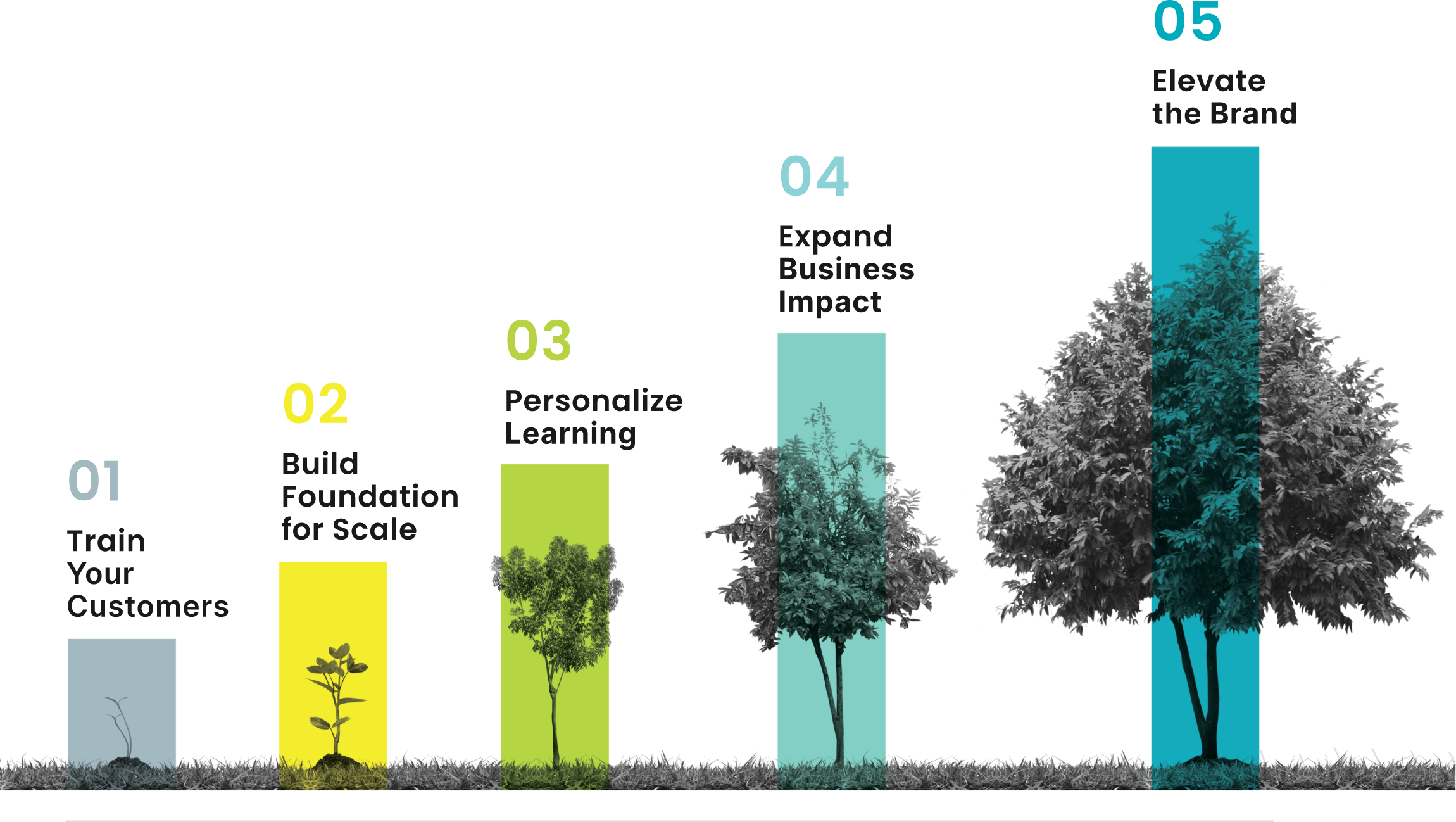
Customer learning programs tend to progress sequentially through these five stages, and can often straddle two stages at once. We’ve found that companies report performance gains with each step forward, as well as specific challenges in advancing the next stage.

Stage 1: Train Your Customers

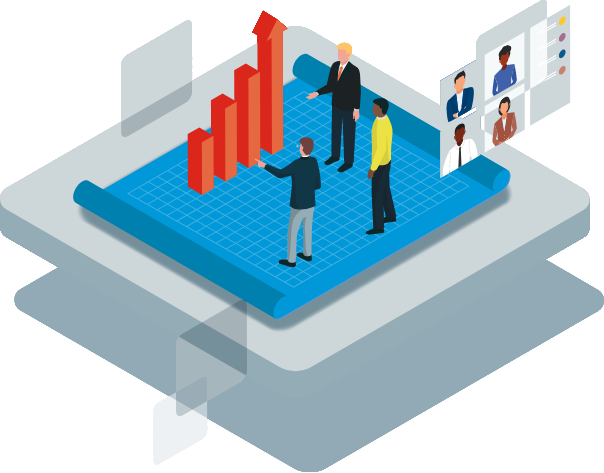
Customer learning is delivered primarily live; either via Instructor-Led Training (ILT), or more recently, Virtual Instructor-Led Training (VILT). Organizational size does not necessarily determine maturity – even enterprise-level companies tend to start here before they grow their customer learning programs.

Key Benefit

Builds strong customer relationships and offers speedy time to value.


Primary Challenge

Difficult to scale time-intensive, live training as the business grows.

Stage 2: Build Foundation for Scale

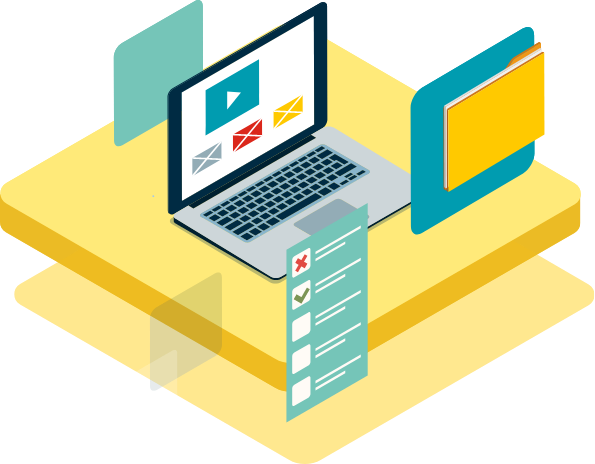
When organizations realize that an all-live training offering simply won’t scale with the business, they turn to a digital foundation for learning, and most often, this is when organizations invest in a learning management system and on-demand content.

Key Benefit

Customers get up to speed on their own time, allowing the learning team to shift from delivering training to operating more strategically.


Primary Challenge

Without proper guidance, a scaled one-size-fits all approach to learning may overwhelm customers.

Stage 3: Personalize Learning

At this stage, digital learning becomes more personalized to your customers. For many organizations, this means mapping the most critical user personas and defining what their ideal learning offering would look like. 

Programs who have personalized their offerings often begin to monetize higher-value content with subscriptions or certifications.

Demo
Key Benefit

This more targeted approach to learning increases product adoption and net promoter scores (NPS).


Primary Challenge

Personalized delivery is only as valuable as your ability to connect it to adoption, retention, and growth.

Stage 4: Expand Business Impact

The learning team is focused on influencing multiple business metrics across the customer journey. The priorities for measurement have shifted from user impact to business impact. Leaders in this category can measure learning’s effect on KPIs like product adoption, time to value, and retention, making it easier to secure additional investment for program expansion and innovation.

Thought Industries Customer Learning Maturity Model
Key Benefit

Easier to secure additional investment for program expansion and innovation by demonstrating ROI.


Primary Challenge

Data that would allow learning to influence the full customer journey is siloed. 

Stage 5: Elevate the Brand

Through technology and innovation, this is where customer learning starts to push the boundary of what learning can achieve. At this stage, learning doesn’t stop with customers, but is launched on a larger scale, toward the market. 

As technology and customer expectations continue to evolve, these programs constantly test and measure new approaches to delivering both learning and value to customers.

Key Benefit

Learning builds credibility in the market and influences future customers.


Primary Challenge

Various business systems must be integrated to make learner progress and customer outcomes part of a continuous improvement cycle.

Ready to Level Up Your Customer Learning Program?

For more strategies to advance your program, check out our Roadmap to High-Impact Customer Learning. It includes recommended next steps for each stage of the maturity model, along with guidance on building a vision for best-in-class customer learning. Wondering where your organization fits? Take our interactive self-assessment.

Learn More