

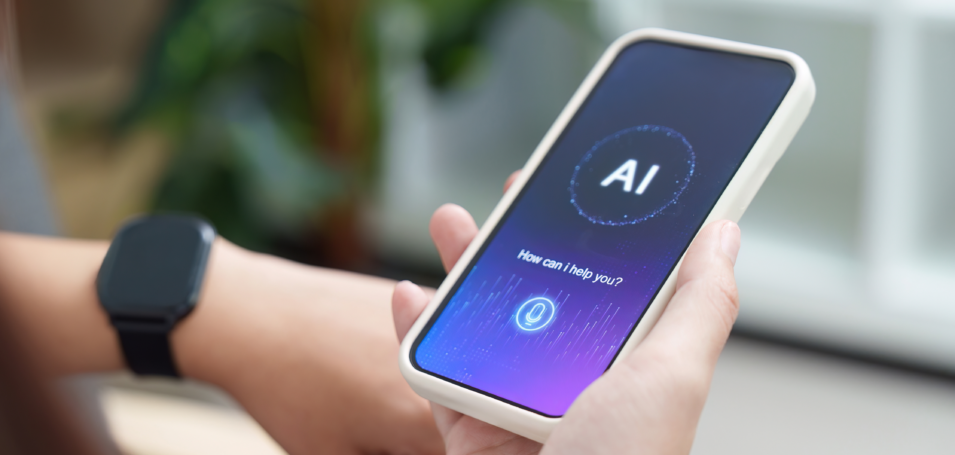


AI has fundamentally changed the way customers find and consume product information and learning content, and is now impacting how and where companies deliver customer education. Our Senior Director, Solutions Marketing, Alicia Fontaine, sat down with Janice Lee, Director of Education Services Research at TSIA, to discuss where a headless LMS fits into the AI era, and how it can serve up personalized, contextual customer education that meets the user where they are.
You can catch up on the full podcast, TECH on Deck: Why a Headless LMS is the Key to Learning Orchestration here, or keep reading for your highlights.
AI has changed the definition of headless technology
For the past several years, the term “headless LMS” has described a learning platform that decouples the front-end user experience from back-end services. Simply put, this means an organization can build their own customized front-end user experience on top of the foundational LMS solution, and then extend this out to different channels and devices.
AI has expanded this definition to include the use of software that neither the end-user nor the admin has to access directly. AI search is a great example of this, as learners increasingly skip the Academy altogether and take their questions to ChatGPT, Claude, Gemini, or any of a growing number of other LLMs. As customer behavior changes, organizations who want to meet the user where they are should be thinking about how they can use headless technology to get their content to the learner in a more personalized, contextual and dynamic way, via the channels that they use every day.
Understanding how AI is shifting customer learning and behavior
The data on how buyers behave backs this up. According to the most recent G2 buyer’s report, 79% of buyers report AI has changed how they conduct research about products. Search is becoming a zero-click activity, where prospects may be researching, comparing and evaluating purchases entirely inside an LLM. Today’s CMOs are understandably very focused on gaining visibility in those channels, and looking for ways to be referenced and cited as a product leader in their categories.
Post-purchase, getting answers to product queries has also fundamentally changed. Product how-to questions trigger a Google AI overview 86 percent of the time, which means companies are effectively competing with Google to educate their own customers. As these answers aren’t necessarily coming from the companies who build the products, accuracy can be hit or miss.
During the podcast, Alicia shared a story about a Thought Industries customer who experienced a 20% drop in web traffic to their Academy as a result of Google’s AI summaries. The accuracy of these responses was around 60%, which meant 40% of the time their product was being misrepresented, potentially contributing to a poor customer experience or user frustration. The company was able to seed accurate answers to various LLMs, iterate over time, and ultimately increase the accuracy level of AI overviews to over 90%.
If customers aren’t heading to the Academy to get their answers anymore, it’s even more crucial that businesses make sure content is up to date, accurate, and relevant, so that when LLMs scrape that content, the right information is delivered, no matter where it is surfaced. It’s about being intentional with how AI represents your product or brand, instead of finding out after the fact through low customer satisfaction ratings or an increase in support tickets.
Improving the impact of Education Services
Delivering content that is current, precise and relevant is about more than having the right technology; it also depends on how well your teams work together behind it. Alicia reminded the audience about the idea of “shipping your org chart”, where today’s customers expect a single experience when they buy a product.
In reality customers are usually served by many departments with their own goals, tech stacks, and silos. This doesn’t always unify into a strong customer experience overall.
AI gives businesses a real opportunity to integrate the customer experience, to better deliver the outcomes customers bought the product to achieve. On the business side, systems integration gives the organization a more complete picture of the customer, too, making it easier to adhere to a segmentation strategy which is personalized, contextual and dynamic.
A headless LMS supports a more unified customer experience, but it can also simplify work for the people working behind the scenes as well. Many LMS admins are already using AI tools on a daily basis to do their work, which is why Thought Industries recently released Thought Industries for Claude. This plug-in allows admins to author, update and manage their learning catalog from inside Claude itself. This is an example of how the definition of headless is evolving to not only describe the front-end user experience but the backend admin experience as well.
This podcast was so full of insights, we’ve hardly scratched the surface! Listen to the recording to learn more about:
- How to structure content to be reused and repurposed as well as relevant, without burning through all of your LLM tokens in the process.
- Surfacing content anywhere, from Just in Time in-product while working, to Just in Case, while browsing or using third-party applications.
- Ensuring the privacy, accuracy and compliance of learning content now it’s being delivered outside of a single, managed repository.