

How Thought Industries built a customer health score from customer signals and used it to intervene early and scale customer success one-to-many.
By Maggie McCarthy, Vice President of Customer Strategy and Digital Success, Thought Industries · Last updated: November 4, 2026
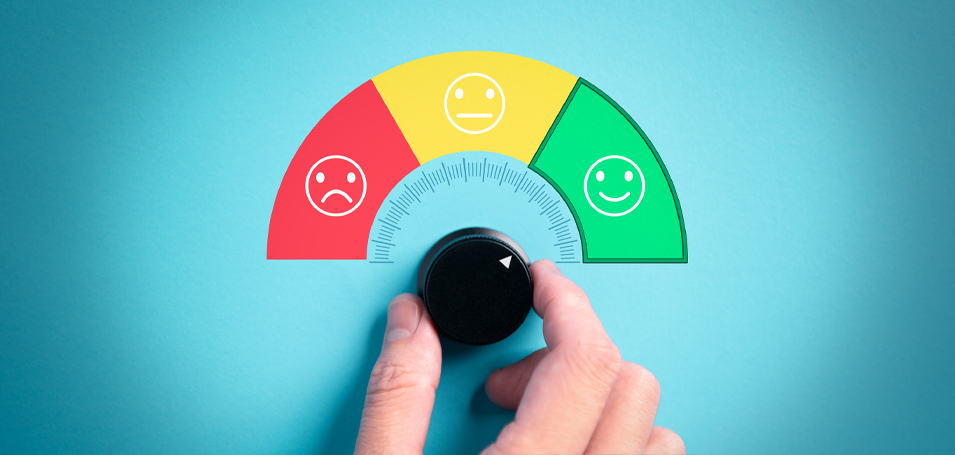
A customer health score turns the signals customers send, such as product use, support tickets, community activity, and logged risks, into an early warning system. At Thought Industries, a score built on consumption, adoption, engagement, experience, and risk sorts accounts into red, yellow, and green, so teams can step in before customers have to ask for help.
- Partnership, not transactions: Your best customers share your goals, contribute insight, and drive initiatives with you.
- Act before they ask: Once a customer reports a problem, friction already exists. Leading indicators let you get two steps ahead.
- Timing matters: The 6 to 12 months before renewal is when intervention has the most impact.
Think partnership, not transactions
To identify your best customers, think partnership, not transactions. That means moving from a vendor-and-customer mindset to one built on collaboration and shared goals. Your best customers are the ones whose vision aligns with yours, who drive initiatives forward, share market insights, and actively contribute to mutual success. When you see your customer base this way, you’ll often find these are the same segments that consistently deliver the most value and drive the most revenue, retention, and expansion.
At Thought Industries, we take a holistic view of customer engagement to understand who a good customer is. For example, by identifying customer segments and using that data to guide our Scaled Success team’s activities, we can increase customer lifetime value (CLV), grow revenue, and improve profitability, both for both our customers and us.
That requires the right data, and it also requires alignment across the organization. Beyond product analytics, support ticket volume indicates product use, but we also look at community interaction and participation in office hours, webinars, and roundtable discussions. Many elements show how engaged a customer is and how much they want to learn and use the product better. You need to capture this data early, act on it, and make it visible to every team so they can act on it too, because engagement can easily fade without your involvement. When a customer puts in the effort, response time is crucial, and you need to match it. That’s the thinking behind our customer health score.
How do you build a predictive customer health score?
To understand customer health and build stronger partnerships, we developed a health score that helps us spot leading indicators and take a more proactive, predictive approach to engagement.
Over the past five years, we’ve analyzed indicators of churn and used that data to build a health score around five key signals:
| Signal | What it captures |
|---|---|
| Consumption | How much of the platform the customer uses |
| Adoption | Which features they use, and how deeply |
| Engagement | Participation in community, office hours, webinars, and roundtables |
| Experience | Support ticket volume, escalations, and responsiveness |
| Risk | Risks logged by anyone in the company, and how many |
We haven’t tracked everything consistently over that time, but the trends let us define red, yellow, and green categories and create triggers our Scaled Success team can act on proactively. For example, if a customer hasn’t communicated in the past 30 days, through community, support, or email, the Success team gets an alert to review the account and send a check-in. If unusual activity is logged, Success gets a similar alert.
With this health score, we’ve moved from a reactive approach to a far more proactive one. After all, once a customer reaches out with an issue, friction’s already in place. If we can intervene earlier and notice something before the customer has to tell us, we’re already two steps ahead.
How should you prioritize intervention?
To identify where intervention is most needed and segment customers accurately, we use customer tiers based on contract value, account size, and growth potential. We also use renewal dates: in the six to twelve months before a renewal, you can have a lot of impact with a customer. After the six-month mark, you may have missed your chance.
We also track customer health risk strictly across the business. Any internal stakeholder can log a customer risk indicator, whether they saw it in a community Slack channel or in a support or development escalation with an alarming request. The customer’s health score adjusts automatically based on risk level and how many risks have been logged. Those continuous updates let the Scaled Success team focus on accounts moving from green to yellow, or yellow to red.
The health score helps teams well beyond Scaled Success:
- Product analyzes feedback using the same customer tiers and health data, prioritizes it by risk level, and uses a common language with development teams and other stakeholders.
- Sales works with revenue operations to find prospects that resemble our best, healthiest customers.
- Marketing can say, “We have a LinkedIn Live or a new case study coming up; let’s pick a green customer in the right industry to tell that story.”
Shifting to a scaled customer success model
Part of segmenting customers is scaling success beyond one customer success manager (CSM) per customer, where the CSM fights fires and solves problems as they happen. A one-to-one approach builds personal relationships. But it can hurt information consistency and create duplicate effort, since every CSM has to be trained and enabled, rather than getting each customer the right information at the right time. It can also create silos, with customer information and communication spread across many CSMs working individually. Those silos make it much harder to recognize your best customers and to share that knowledge with the business for strategic decisions.
That’s why we’ve moved to a one-to-many approach for sharing product updates, upcoming events, and thought leadership content. Everything our CSM team used to share with assigned accounts now lives in our customer community and academy, accessible and consistent for every customer. Making the shift work takes a truly customer-centric Scaled Success team that understands customer behavior and the value our platform can create for them, which is far easier with our customer health model. By recognizing the attributes of our best customers, the team can help customers in similar cohorts find the right resources at the right time, whether that’s posting product feedback in the community, joining a relevant webinar, or reading a knowledge base article.
We still use a one-to-one approach for account management and strategic planning, using data and direct help from cross-functional teams to prepare for and address customer needs.
As a result, escalated support tickets and overall support ticket volume are down significantly year over year. By understanding and addressing customer needs proactively, we’ve become better partners in our customers’ success.
Proactive playbooks are another part of our scaled success model: automations that let us efficiently notify or reach out to the right customer segments. Say a product release affects one specific feature. By identifying every customer who uses that feature, we can send targeted communication about the update alongside a more general release note for all users. Or, if an executive or admin user leaves a customer’s company, a playbook can identify the new stakeholder on LinkedIn, so our Scaled Success team can reach out and engage them proactively.
What does a governed AI knowledge layer change?
Every signal in a health score depends on what customers do and ask. More and more, they ask questions in places you can’t easily see, like AI tools or an assistant in your product, and those answers don’t always match your academy, community, or support content. When they don’t, customers quietly lose confidence, and the signal shows up too late.
A governed AI knowledge layer closes that gap. It connects the knowledge your teams already have, catches contradictions before customers see them, and applies your rules, so customers and AI agents get the same trusted answers everywhere. It also turns every question into a signal. The Customer Knowledge AI Platform from Thought Industries brings this together: Thought Industries Academy delivers learning at scale, and Thought Industries’ Lens uses knowledge agents to answer customers in your product and the AI tools they use, showing where customers are stuck, ready to expand, or at risk.
Embracing a data-driven approach
Using data to truly understand customer health matters more than ever. Businesses have always tried to identify their best customers, but too often based on gut feeling or personal relationships.
A data-driven approach brings clarity, removes bias, and adds intention to every action. That leads to deeper personalization, stronger partnerships, and scalable success. When you view your customer base this way, you’ll often find these segments drive the most value, revenue, retention, and growth. For more on recognizing and growing best customers, see how to improve net revenue retention with the Know, Show, Grow framework and customer value realization.
Maggie McCarthy is Vice President of Customer Strategy and Digital Success at Thought Industries, with more than a decade of SaaS experience in customer success and product management. She focuses on scaling customer operations, improving time to value, and driving long-term growth through strategic, technology-enabled initiatives.
Frequently asked questions
What is a customer health score?
A customer health score combines signals such as product use, feature adoption, engagement, support experience, and logged risks into a single rating, often red, yellow, or green. It helps teams spot at-risk or high-potential accounts early and act before problems surface.
What signals should a customer health score include?
Useful signals include product consumption and feature adoption, engagement in community, office hours, webinars, and roundtables, support ticket volume and escalations, communication gaps such as no contact in 30 days, and risks logged by any team.
How do you identify your best customers?
Look for partnership, not just revenue: customers whose goals align with yours, who share market insight, and who actively engage. Combine that view with health score data, and these customers usually turn out to drive the most value, retention, and expansion.
What is a scaled customer success model?
A scaled, or one-to-many, customer success model shares product updates, events, and guidance with all customers through channels like a customer community and academy, instead of relying only on individual customer success managers, while keeping one-to-one support for strategic accounts.
When should customer success teams intervene before renewal?
Intervene early. The six to twelve months before a renewal is when outreach has the most impact; after that, the window to change the outcome narrows quickly.
See Thought Industries in action
Get a personalized demo of the Customer Knowledge AI Platform, built around your products and your customers.
Book a personalized demo